Khajuraho — Central India's Sculpted Masterpiece
A UNESCO World Heritage temple complex built by the Chandela dynasty, famous for some of the most intricately carved stone sculpture anywhere in India.
Best Season
October to March
Ideal Trip Length
1 – 2 Days
Main Gateway
Khajuraho (HJR)
Languages Spoken
English, Hindi
Central India's Sculpted Masterpiece
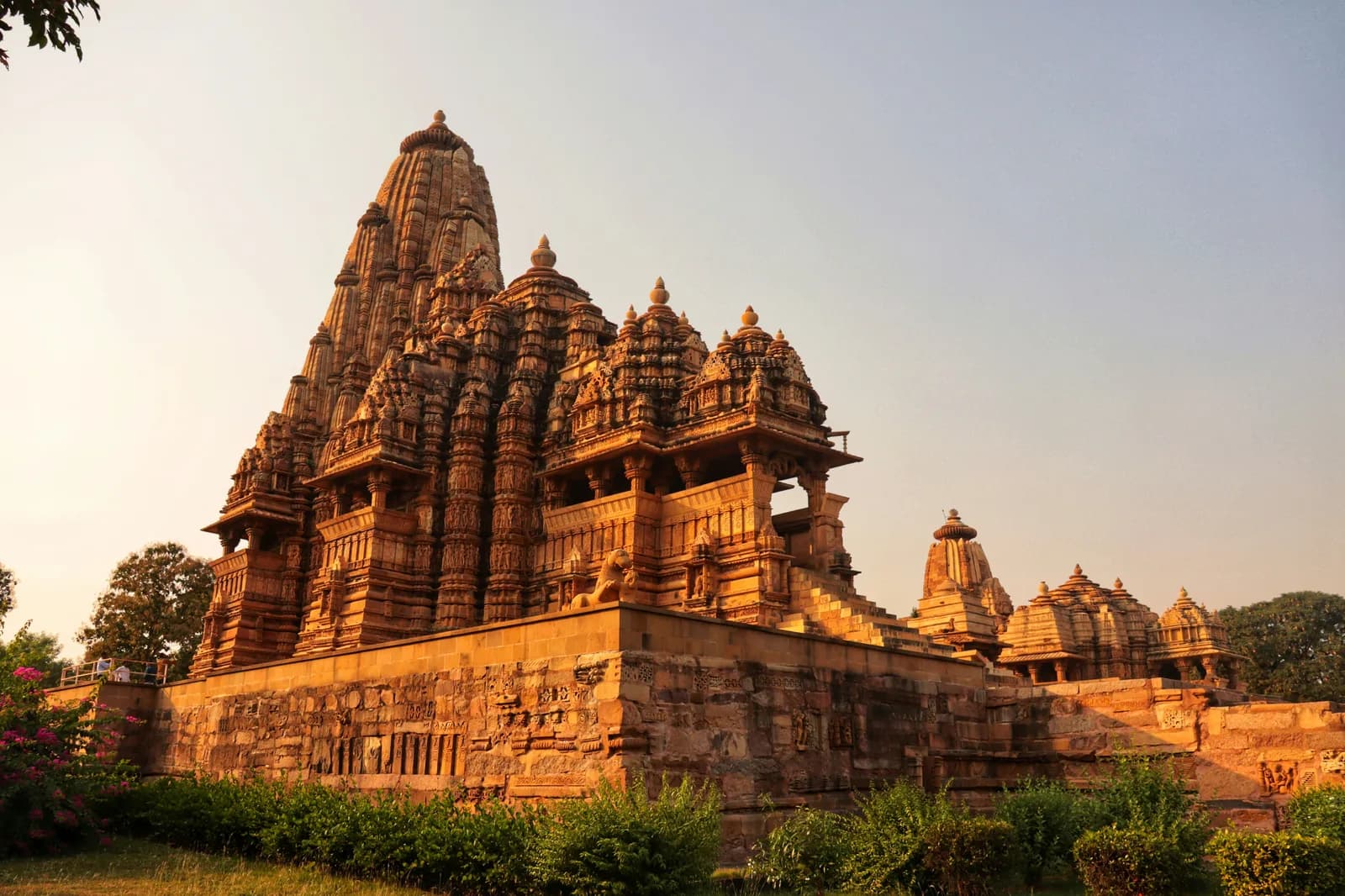
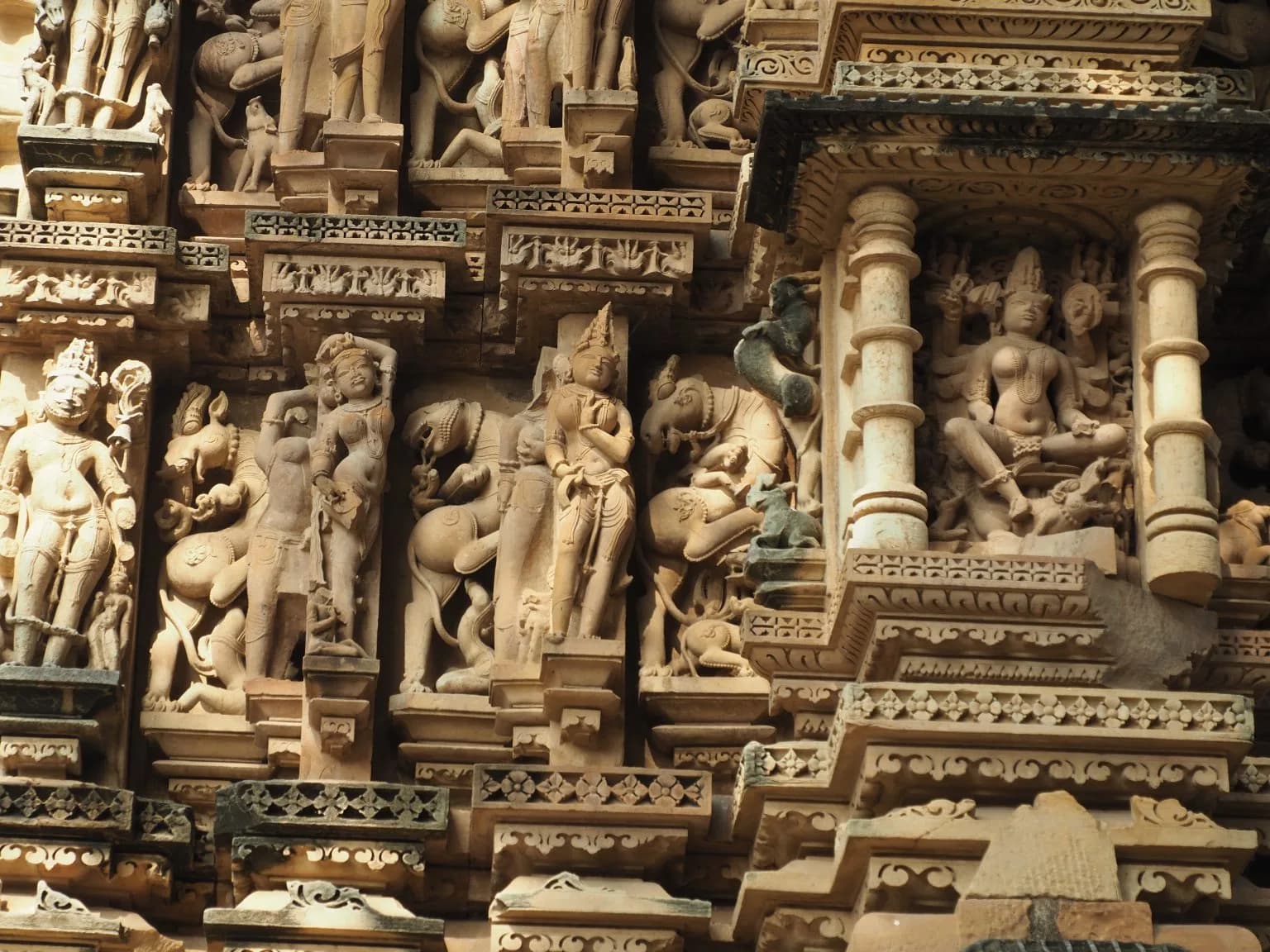
Khajuraho sits in the heart of Madhya Pradesh, and its temple complex — built by the Chandela dynasty between roughly 950 and 1050 CE — is widely considered one of the finest surviving examples of medieval Indian temple architecture anywhere in the country. What sets it apart isn't just the architecture itself, but the sheer density and detail of the sculpture covering nearly every surface — thousands of carved figures depicting deities, celestial beings, musicians, warriors and everyday life, executed with a precision that's genuinely remarkable to see up close.
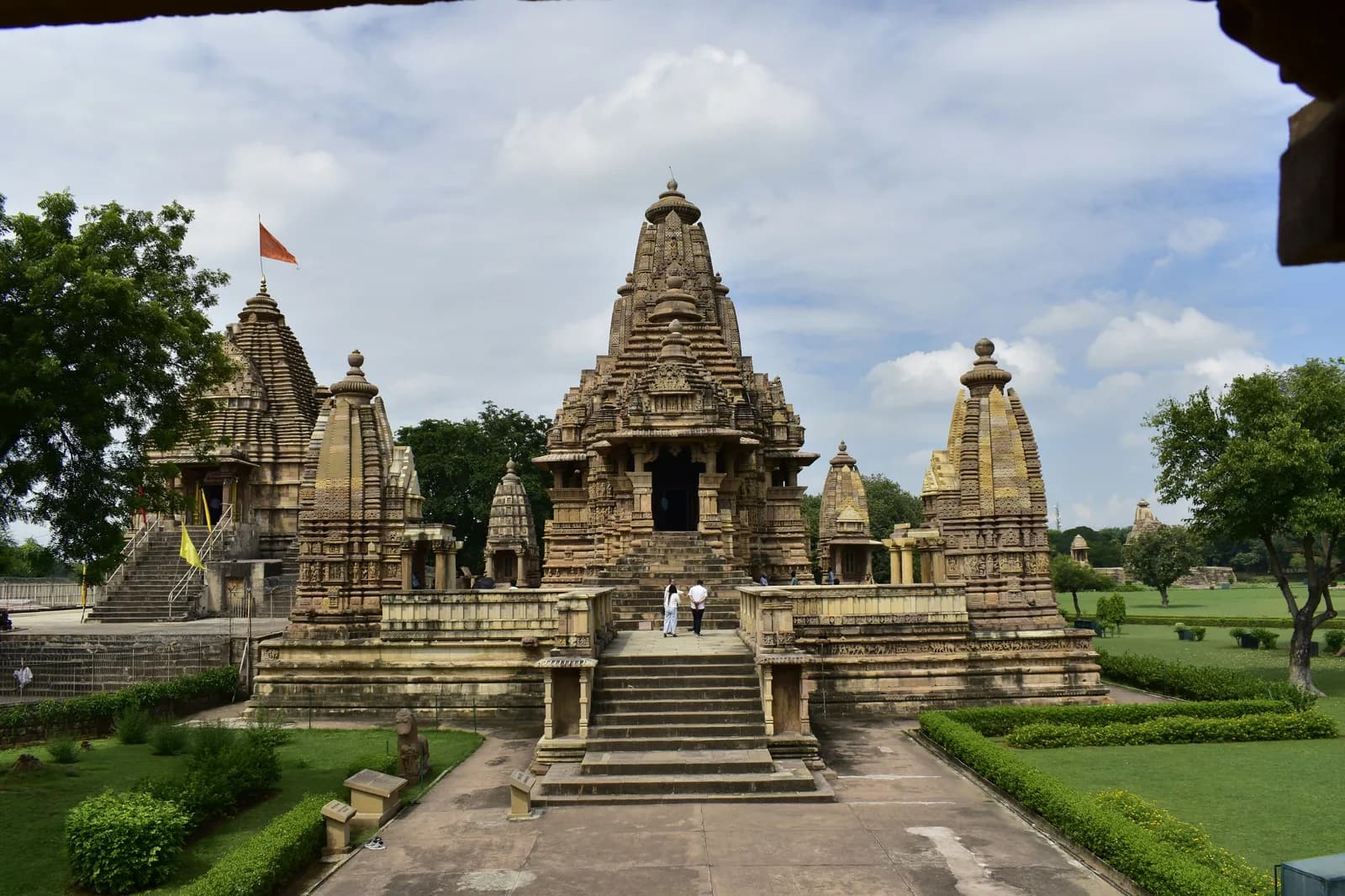
The Western Group holds the largest and best-preserved temples, including the Kandariya Mahadeva Temple, Khajuraho's largest and most architecturally accomplished structure, its tower rising in a dramatic series of ascending peaks. The quieter Eastern and Southern Groups, home to a mix of Jain and Hindu temples, see far fewer visitors and offer a more contemplative alternative for travellers who want to explore beyond the main circuit. Recognised as a UNESCO World Heritage Site, Khajuraho typically works as a 1 to 2 day stop connected by direct flights to Delhi and Varanasi, making it a natural addition to a wider North India itinerary rather than a standalone destination.
What to See
Getting There
By Air
Khajuraho Airport (HJR) has direct flights from Delhi and Varanasi, making it the most straightforward way in for most international itineraries.
By Rail
Khajuraho has its own railway station with connections to Delhi, Agra and Varanasi, though journey times are considerably longer than flying.
Typical Pairing
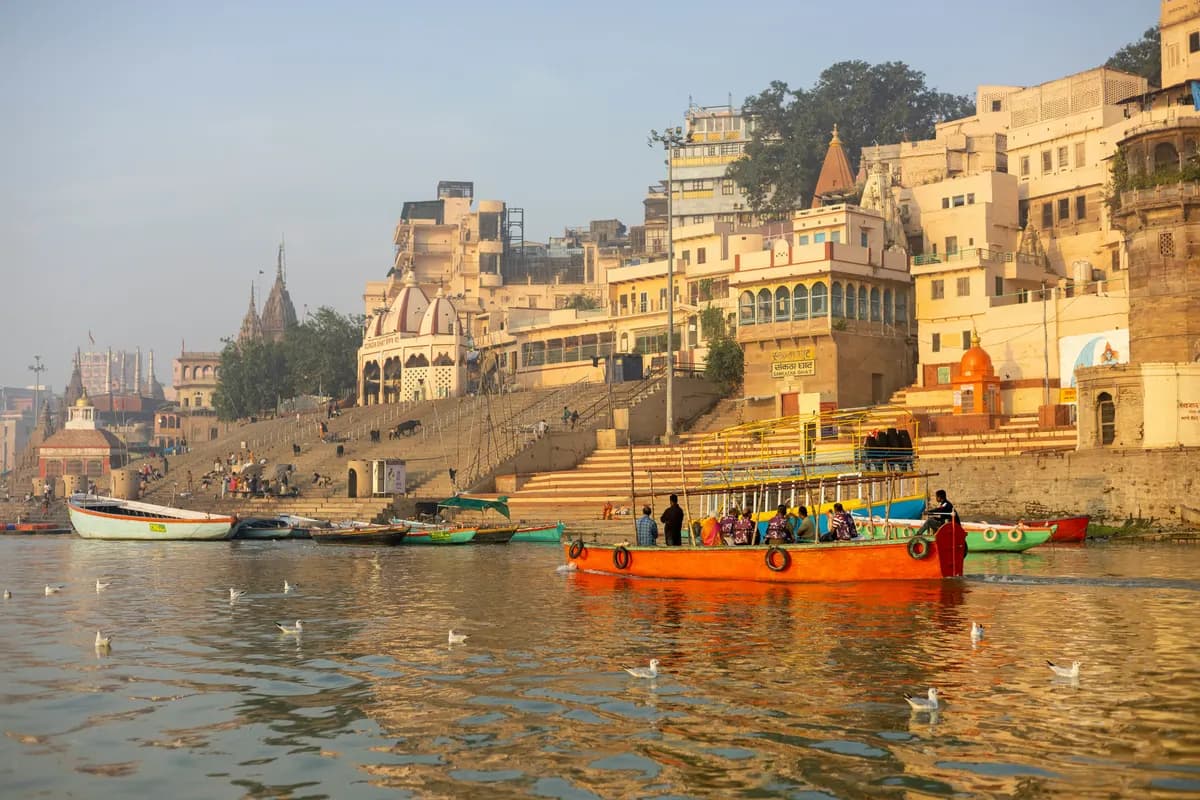
Most commonly combined with a wider North India circuit via Varanasi or Agra, given the shared flight connections between them.
What Makes This Different
A UNESCO World Heritage Site
Khajuraho's temple complex is recognised by UNESCO as one of the finest surviving examples of medieval Indian temple architecture.
Extraordinarily Detailed Sculpture
Nearly every surface of the main temples is covered in carved figures — deities, celestial beings, and scenes from daily life — created with a level of detail rarely matched elsewhere.
Built by the Chandela Dynasty
Constructed over roughly a century by the Chandela rulers, the temples represent a concentrated burst of architectural ambition rarely seen on this scale.
A Quieter UNESCO Site
Compared with the Taj Mahal or Delhi's major monuments, Khajuraho sees considerably fewer visitors, making for a more contemplative visit.
A Genuinely Different Kind of Temple Art
Khajuraho's sculptural style — including its well-known depictions of human intimacy alongside gods, warriors and everyday life — is unlike anything else on a typical North India itinerary.
October to March is the Best Season
Cooler, more comfortable weather makes this the best window for exploring the temple complex on foot. Summer brings intense heat that makes midday sightseeing genuinely uncomfortable.
Nearby & Related Destinations
Getting Around by Private Car



Common Questions
What first-time visitors to Khajuraho usually want to know.
Can't find your answer? Our team responds within 2 hours on WhatsApp and within 12 hours by email.
Is Khajuraho only known for its erotic sculptures?
No — while that aspect draws attention, it represents a small proportion of the overall carving. The vast majority depicts deities, mythological scenes, warriors, musicians and everyday life, all part of a broader artistic and spiritual tradition.
How many days should we plan for Khajuraho?
1 to 2 days is usually enough to properly see the Western Group in depth, plus the quieter Eastern and Southern groups if you have a second day.
Is Khajuraho appropriate to visit with children?
Yes — it's a genuine heritage and architectural site, and most guided visits focus on the historical, artistic and religious significance of the temples rather than any single aspect of the carving.
Can this be combined with Varanasi and Agra in one trip?
Yes — Khajuraho has direct flights to both, making it a natural addition to a wider North India itinerary rather than a standalone destination.
No — while that aspect draws attention, it represents a small proportion of the overall carving. The vast majority depicts deities, mythological scenes, warriors, musicians and everyday life, all part of a broader artistic and spiritual tradition.
1 to 2 days is usually enough to properly see the Western Group in depth, plus the quieter Eastern and Southern groups if you have a second day.
Yes — it's a genuine heritage and architectural site, and most guided visits focus on the historical, artistic and religious significance of the temples rather than any single aspect of the carving.
Yes — Khajuraho has direct flights to both, making it a natural addition to a wider North India itinerary rather than a standalone destination.
Itinerary planned by Dhruv Poonia, Digital & Marketing Manager
Start Your Journey
Your Journey to Khajuraho Awaits.
When Will You Go?
Tell us how many days you have and what you'd like to see — we'll reply with a tailored itinerary and quote, usually within 24 hours.